Queer Places:
University of Cambridge, 4 Mill Ln, Cambridge CB2 1RZ
Ascension Burial Ground, All Souls Ln, Cambridge CB3 0EA
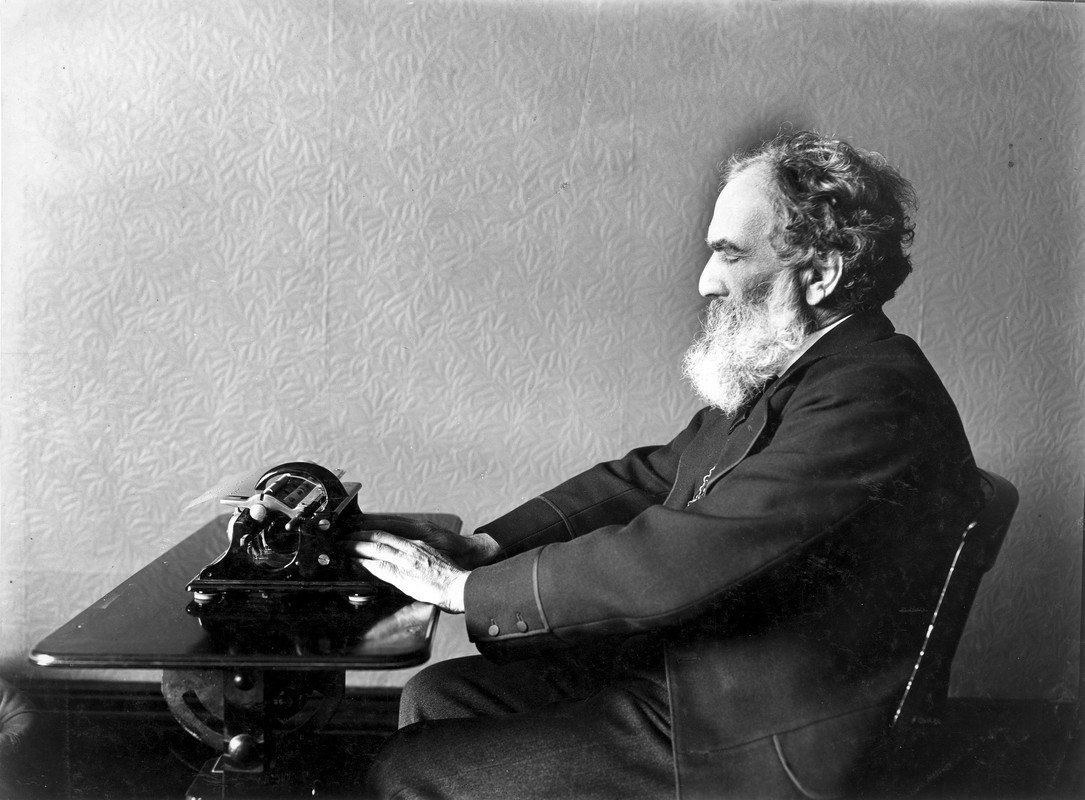 Henry Martyn Taylor (June 6, 1842 – October 16, 1927) was a distinguished British mathematician, academic, and progressive advocate for the blind. While his academic
career was rooted deeply in the mathematical traditions of the University of Cambridge, his intellectual life was shaped significantly by his early association with the
highly exclusive and influential intellectual secret society, the Cambridge Apostles.
Henry Martyn Taylor (June 6, 1842 – October 16, 1927) was a distinguished British mathematician, academic, and progressive advocate for the blind. While his academic
career was rooted deeply in the mathematical traditions of the University of Cambridge, his intellectual life was shaped significantly by his early association with the
highly exclusive and influential intellectual secret society, the Cambridge Apostles.
Born in Bristol, Taylor was educated at Trinity College, Cambridge. He excelled in the highly competitive Cambridge Mathematical Tripos, graduating as Third Wrangler
in 1865 (meaning he placed third in the first-class honors list for mathematics).
He quickly became a fellow of Trinity College in 1866, subsequently serving as a tutor and lecturer in mathematics from 1869 to 1894. His academic work primarily
focused on geometry, and he is perhaps best known in mathematical circles for editing Euclid's Elements of Geometry for the Cambridge University Press—a widely used
textbook series in the late 19th and early 20th centuries.
In recognition of his contributions to mathematics, he was elected a Fellow of the Royal Society (FRS) in 1898.
To understand Taylor's intellectual development, one must look to his election to the Cambridge Apostles (officially active as the Cambridge Conversazione Society).
Taylor was elected to the active membership of the Apostles in 1863 during his undergraduate years at Trinity College.
The Apostles were an elite, highly secretive debating society founded in 1820. Membership was extremely restricted, usually consisting of only about a dozen active
undergraduate members (referred to as "the Apostles" or "the active") at any one time, while older, former active members were known as "Angels."
During the 1860s, the society was a crucible for radical honesty, philosophical inquiry, and intense debate. Members met weekly on Saturday nights to eat anchovy
toast (called "whales") and debate a paper read by one of the members on highly philosophical, theological, or political topics.
The society operated under an absolute oath of secrecy, which allowed members to discard conventional Victorian social and religious dogmas.
The friendships Taylor forged within this group were lifelong. The Apostles valued a concept they called "Apostolic mutual affection"—a deep, intellectual, and often
highly emotional bond between members.
During his time in the active society and as a young "Angel," Taylor interacted with prominent figures like philosopher
Henry Sidgwick, classicist Sir Richard Claverhouse Jebb, and physicist
James Clerk Maxwell.
Taylor remained connected to the society's network throughout his life, transitioning to an "Angel" as he became a fellow at Trinity, which allowed him to mentor and
observe successive generations of Apostles.
In 1894, at the age of 52, Taylor suffered a sudden and tragic loss of sight. Rather than retiring from public life, his blindness catalyzed his most impactful
humanitarian work.
Applying his formidable mathematical mind to the challenges faced by the visually impaired, Taylor recognized that the existing Braille system lacked a standardized,
efficient method for writing complex scientific and mathematical notation.
Taylor invented a specialized Braille system for mathematical and scientific notation.
In 1897, under the auspices of the Royal Society, he established this fund to help finance the incredibly expensive process of embossing scientific books in Braille.
He personally transcribed numerous advanced mathematical textbooks into Braille, opening the world of higher mathematics to blind students.
In addition to his scientific work, Taylor served as the Mayor of Cambridge from 1900 to 1901, demonstrating his continued commitment to civic duty despite his lack
of sight. He lived out his remaining years in Cambridge, dying in 1927 at the age of 85.
His transition from a brilliant "Apostolic" theoretician to a practical, compassionate innovator remains a testament to his intellect and resilience.
References:
- https://en.wikipedia.org/wiki/Henry_Martyn_Taylor
- https://mathshistory.st-andrews.ac.uk/Biographies/Taylor_Henry/
Support this project
This website is a passion project researched, developed, and funded entirely by me. If you find the content valuable and would like to help support the ongoing research and hosting costs, any contribution is deeply appreciated.
Thank you for keeping this independent resource alive!
My books on Amazon: Elisa Rolle's books
BACK TO HOME PAGE